
Walk into any tile showroom in India and you will hear both words: GVT and porcelain. They are often used as if they mean the same thing. They overlap a lot, but they describe different things, and knowing the difference helps you buy the right tile.
What “porcelain” means
Porcelain is a description of the tile body. A porcelain tile is made from fine clays, feldspar and quartz, pressed hard and fired at high temperature until the body becomes dense and almost glass-like. The usual technical test is water absorption: under the international standard ISO 13006, tiles that absorb 0.5% of their weight in water or less sit in the densest group, which is what most people mean by porcelain.
What “GVT” means
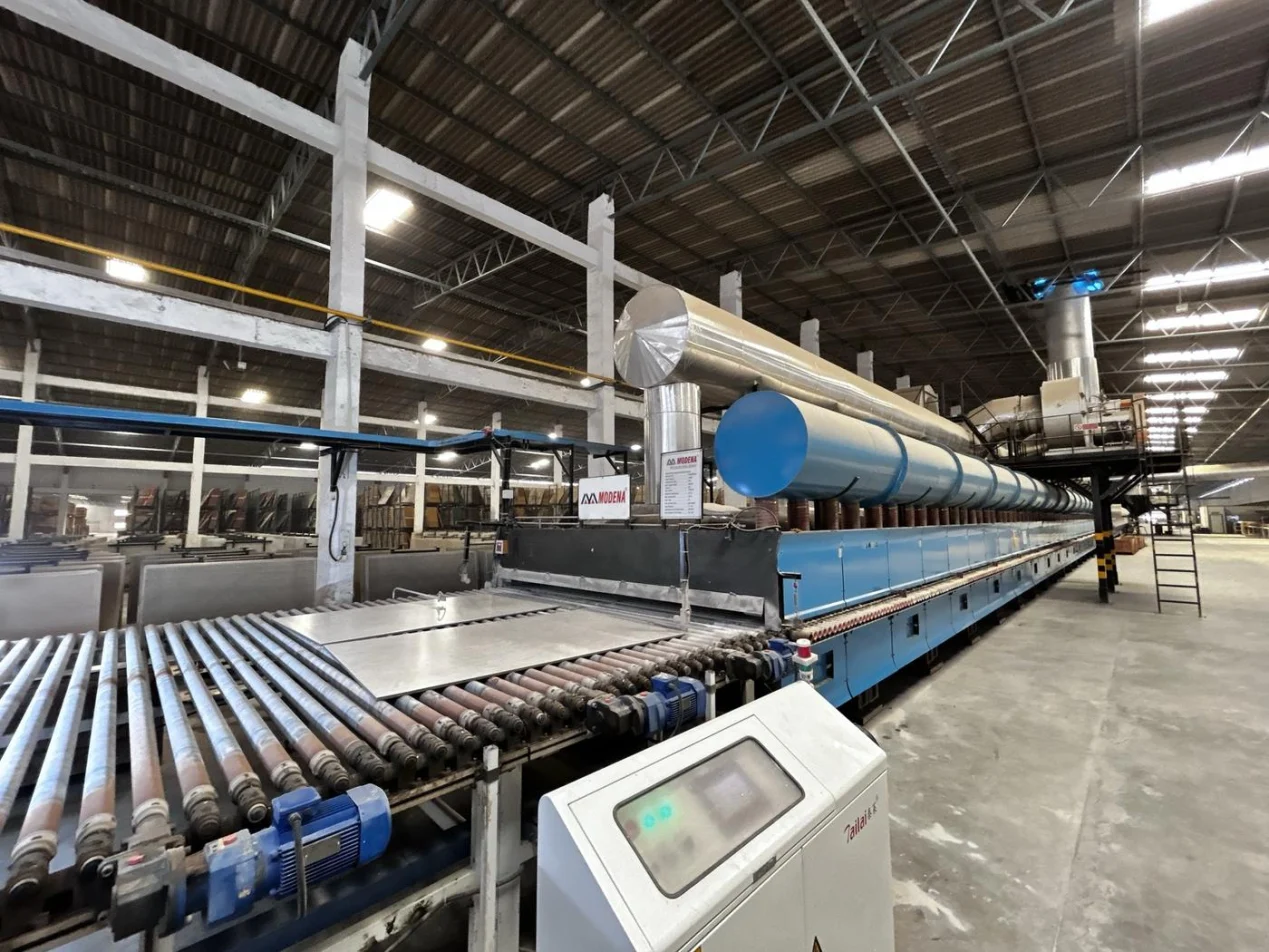
GVT stands for glazed vitrified tile. “Vitrified” is the word the Indian tile industry uses for the same dense, low-absorption body. “Glazed” tells you about the face: a layer of glaze is applied on top of the body, the design is printed into it with high-definition digital inkjet printers, and the glaze is fused to the body in the kiln.
So a GVT is a dense vitrified body with a printed, glazed face. Many tiles sold abroad as “glazed porcelain” are made the same way.
Body versus surface
The practical difference is where the design lives.
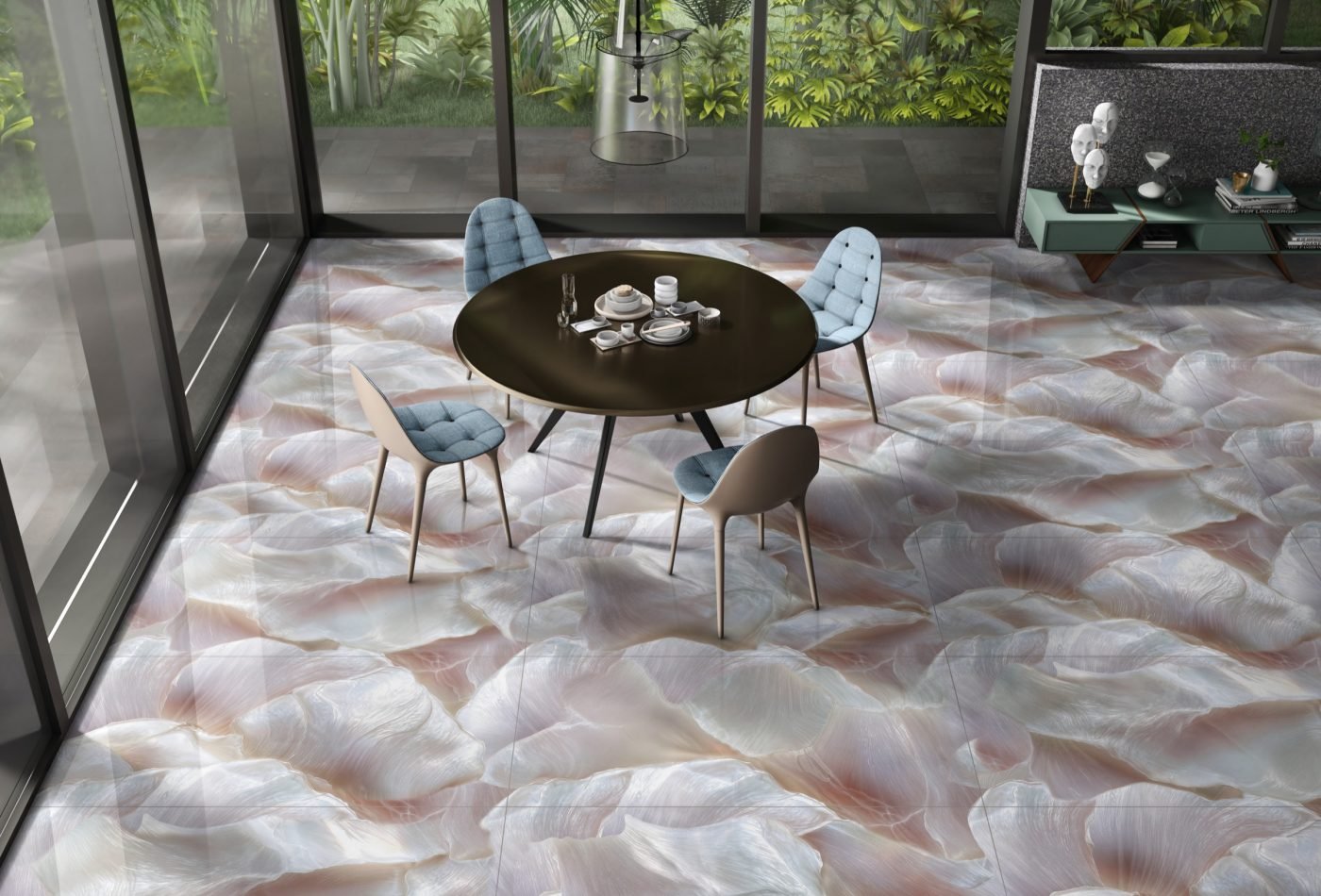
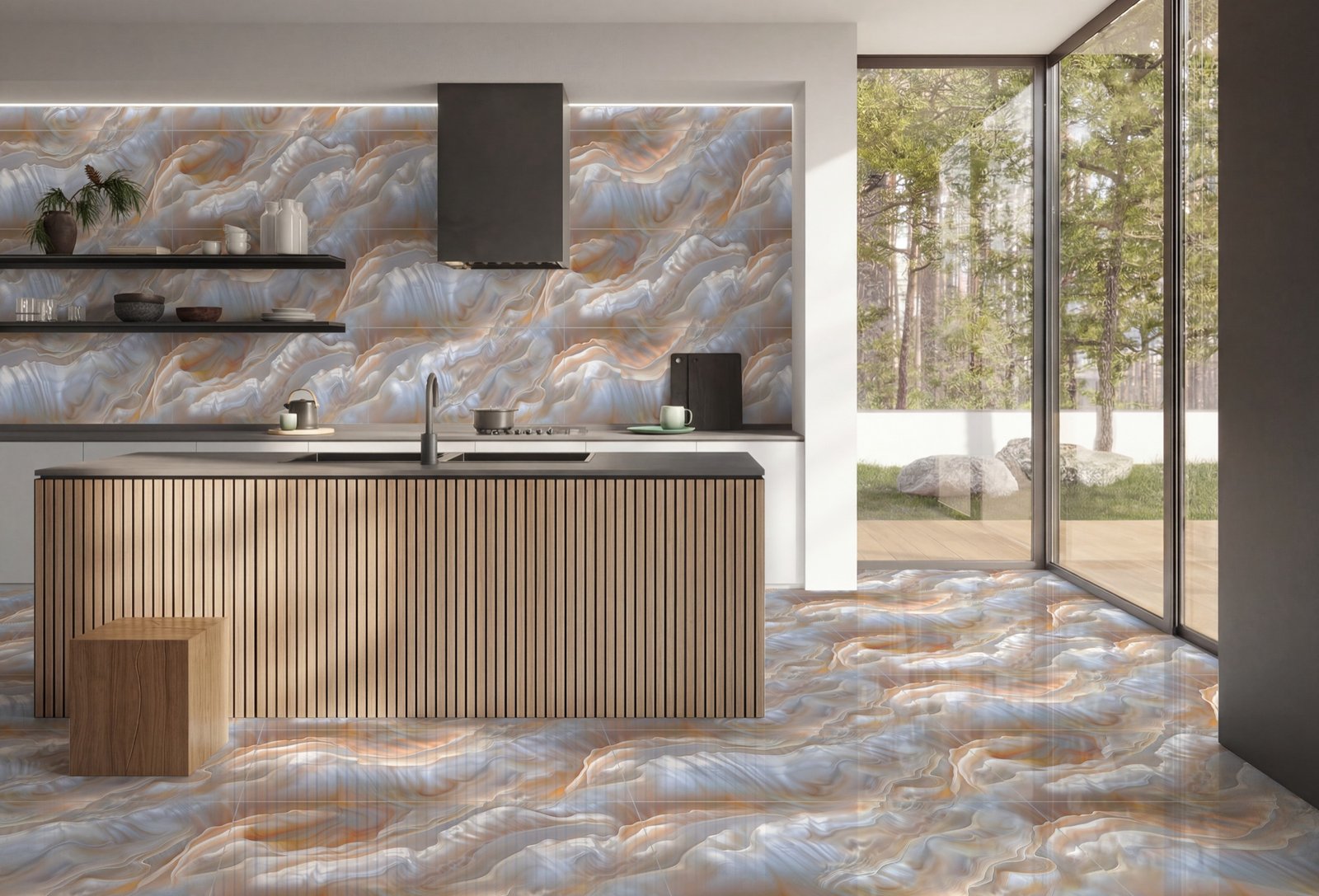
- In a GVT, the design sits in the glaze layer on top. That is what allows marble veining, pearl effects, wood grain and stone textures in sharp detail.
- In a full-body or through-body porcelain tile, the colour runs through the whole thickness. The surface is usually plainer, but a chip shows the same colour underneath.
Which one should you choose?
- For homes, offices, hotels and shops, GVT gives the widest choice of design and finish, and it suits both floors and walls.
- For very heavy industrial traffic, where wheels and grit grind the surface every day, a full-body tile can be the safer choice.
- In both cases, check the finish. Glossy faces show reflection and depth; matt faces hide everyday wear and are calmer underfoot.
How Candy Granito makes it
Candy Granito makes glazed vitrified tiles in one format, 600 × 1200 mm, 9 mm thick, in Morbi, Gujarat. The face is printed digitally and fired, and every tile is rectified for narrow grout joints. Finishes include glossy, matt, carving and sugar. The LUX Series, for example, is a pearlescent glossy GVT with four designs, 7001 to 7004.
If you need test values for a project, such as water absorption or breaking strength, the team shares them on request through the contact page. See the technical information for sizes, packing and care, or read how tiles are made.